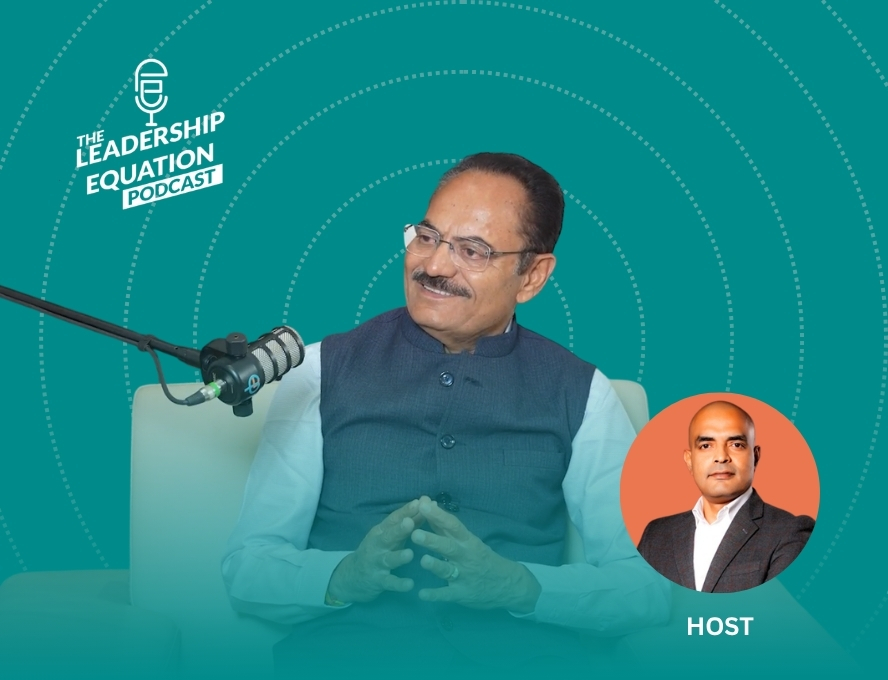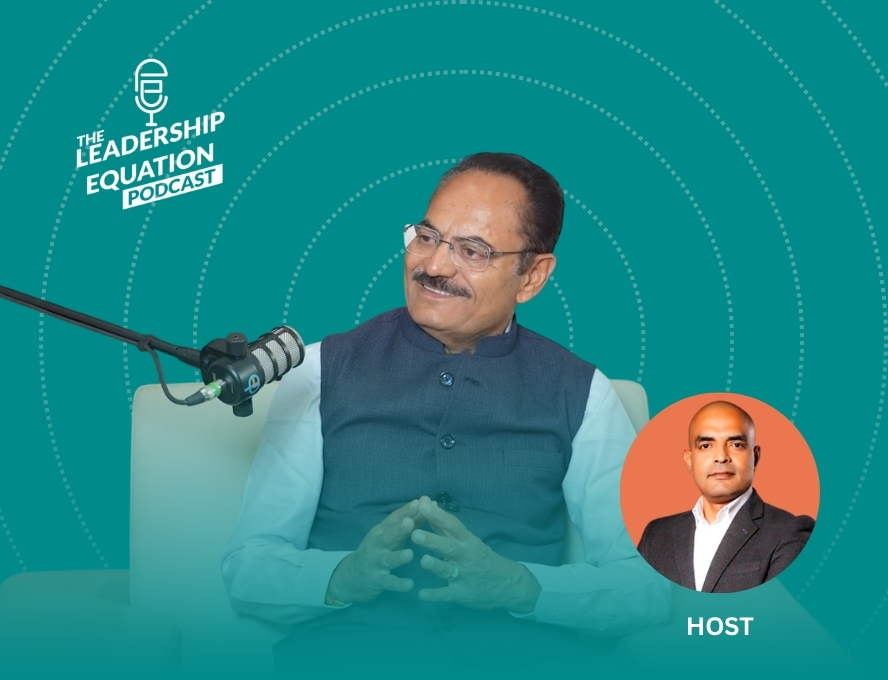
Balaji Wafers Rejected 39 Investors in 50 Years. Here’s Why One Got In.

You’ve built a company. It works. It’s profitable. The question is whether it will survive you.

This episode explores the structural reasoning behind one of the most significant governance decisions in Indian family business: Balaji Wafers’ first equity dilution in fifty years, a 7% stake to General Atlantic, capped at 25%.

Chandubhai Virani’s motivation was not capital. It was accountability. His reasoning: in a family-owned company, the owner has no owner. A family member can drive the business into a ditch, and no one can stop them. Professional governance builds the correction.

What you’ll learn in this episode:

  • Why professionalisation matters more than capital injection for family businesses approaching generational transition.
  • How to build organisational depth so that no single person’s exit disrupts the company. Five senior Balaji leaders left for major competitors in one year. The numbers held.
  • Why transparency and external accountability (SEBI, quarterly calls, analyst meetings) can strengthen a founder-led company rather than constrain it.
  • How to evaluate investors not by their capital, but by their ability to help you build governance.

This episode is for founders, family business owners, and investors thinking about succession, governance, and long-term institutional value.

Also available on YouTube, Spotify and Apple Podcasts.

How India’s Biggest Wafer Brand Runs Without Sales Targets

Discover how one of India’s most successful consumer brands was built without sales targets, discounts, or a profit-first mindset. 

In this conversation, Chandubhai shares the business philosophy and leadership principles that helped scale Balaji Wafers into a household name while preserving its culture, product quality, and long-term focus. 

What you’ll learn in this episode: 

  • Why customer satisfaction, not sales targets, is the foundation of sustainable business growth.  
  • How to build a high-performance culture through trust, delegation, and ownership instead of pressure and KPIs.  
  • Why protecting organizational culture becomes critical as a company scales across markets and geographies.  
  • How operational excellence and close involvement with the shop floor drive product consistency and competitive advantage.  

This episode is valuable for founders, CEOs, business leaders, and entrepreneurs looking to build a scalable business, strengthen company culture, and create lasting competitive advantage through simplicity, discipline, and a deep understanding of the customer. 

Also available on YouTube, Spotify and Apple Podcasts.

Human-Centered Transformation

What if organisations fail at transformation not because they can’t change, but because people can’t see themselves inside the change? 

Most leaders build a business case for transformation. Few ever build the people case. 

In this final episode of the series, Nitin Paranjpe unpacks the uncomfortable truths behind why transformations break, and what it really takes to lead lasting, human-centred change. With humility and candour, he explains the blind spots leaders carry, the emotional cost organisations overlook, and why “true care” is a structural discipline, not a soft ideal. 

What’s Inside: 

  • The four hidden reasons most transformations fail 
  • Why one narrative can never move an entire organisation 
  • The business case vs the people case 
  • The behavioural gaps leaders underestimate 
  • A powerful model inspired by Bob Chapman: how care becomes a system 
  • How humanity and performance strengthen each other 

Watch the full episode and reimagine how change should be led. 

If transformation is inevitable, humanity cannot be optional. 

All episodes also available on People Equation, YouTube, Spotify, or Apple Podcasts. 

The Human Architecture of Extraordinary Outcomes

Can pride and purpose replace budget as a competitive edge? 

Institutions rarely fail for lack of plans, they fail for lack of human belief. 

Nitin Paranjpe, who helped shape HUL’s culture and strategy, shares how a leader’s job is to create conditions where ambitious goals outpace resources, yet people feel safe, proud and invested. 

What’s inside: 

  • How a vision must be both collectively inspiring and individually relatable. 
  • The three conditions for transformational outcomes: a desired outcome people want, psychological safety, and trust in leadership. 
  • Why culture must amplify strategy, not mimic a generic “good culture.” 
  • Practical stories of rebuilding pride, belief and extraordinary execution. 

Watch the episode to see where audacity, humility and design intersect. 

If leaders master the human equation, resilience becomes a strategic advantage. 

Also available on YouTube, Spotify, Apple Podcasts 

From Belonging To Breakthroughs: A Leader’s Making

What does a leader owe people when audacity meets constraint? 

Nitin Paranjpe maps a leadership life where belonging, humility and one radical idea, A vs R, create the conditions for breakthrough. 

From early days of “prove you belong” to sleepless months of failure, Nitin surfaces four life lessons and a leadership prescription: create a mismatch between ambition and resource, responsibly, and people will surprise you. 

What’s inside the episode: 

  • How early mentorship and direct feedback shaped a standards-first mindset. 
  • The failure that broke assumptions, and the four lessons that followed. 
  • C.K. Prahalad’s A vs R insight and the 500,000-outlet experiment. 
  • The three conditions leaders must engineer: a compelling & relatable vision, psychological safety, and visible leader trust. 

Watch the episode now, see how audacity becomes practice. 

If leaders stop limiting ambitions to available resources, what new human potential will we discover?

Also available on YouTube, Spotify, Apple Podcasts

Foundational Beliefs That Make Institutions into More Than a Company

When an organisation roots itself in the rhythm of a nation, it becomes part of its story. 

In this episode, Nitin Paranjpe reflects on the foundational beliefs that shaped Hindustan Unilever into more than a company: a national institution built on courage, conscience, and long-range conviction. 

What’s Inside the Episode? 

  • The long-term bets that built a 100-year institution 
  • “Good for India, good for business”, how nation-first choices shaped organisational character 
  • Why talent obsession isn’t a slogan but a system 
  • Culture tested under pressure: integrity, meritocracy, and moments that define leaders 
  • A powerful reframe for young founders: performance and humanity are not trade-offs 

Watch the full episode and share what leadership means to you today. 

If an organisation’s soul is visible only in moments of pressure, what story would yours tell? 

Watch or listen to the full series on 

People Equation 

YouTube  

Spotify  

Apple Podcasts 

The Quiet Failure of Success: Inside the GCC Conundrum

Everyone talks about scaling Global Capability Centers (GCCs), but few dare to ask, what truly keeps them from failing?

Or better yet, what separates enduring value creators from glorified cost arbitrage engines? 

In this powerhouse episode, we dive deep into the invisible levers that make or break a GCC, not just at launch, but in the long arc of relevance, value, and evolution. 

In this masterclass, we unpack: 

  • Why some GCCs never “fail,” but never succeed either, the trap of limited success 
  • What it takes to shift India from being a cost center to a value center in global HQ priorities 
  • The anatomy of leverage; How to time and earn the global leadership’s mindshare 
  • When outsourcing works, and when it dangerously doesn’t 
  • Wage bills, rupee depreciation, and hidden cost myths: A brutally clear-eyed view on GCC economics 
  • Build vs Buy: Why promoting internally can outsmart hiring externally (and how to do it right) 
  • The hybrid future: How automation, outsourcing, and in-house capabilities will coexist 
  • The real “nirvana” for GCCs: Not just integration, but dissolution of identity into the global core 

Plus, provocative questions explored: 

  • “What would make a GCC fail to fail?” 
  • “Can capability centers be more than back-offices in disguise?” 
  • “Should we call them GCCs at all?” 
  • “Is growth the only cushion against collapse?” 

 
Whether you’re a global leader, a GCC head, or an ambitious talent in this ecosystem, this is the playbook no one gives you

Tune in to sharpen your edge, challenge assumptions, and stay ahead of what’s next. 

Watch or listen now and rethink what it really means to ‘build a capability center’. 

YouTube 

Spotify 

Apple Podcast 

The Architecture of Impact: Building GCCs That Matter 

What does it really take to build a world-class GCC? 

In this episode, we get honest about the tough truths and deeper levers of GCC evolution, from flat organisation dreams to tall structures, from push-and-pull growth cycles to the power of local leadership in global networks. 

In this conversation we discuss: 

  • Why organisation design can make or break your GCC 
  • Navigating the India vs global grading conundrum 
  • The subtle trap of promotions and hierarchy inflation 
  • EVP decoded: A three-layer framework (finances, emotion, intellect) 
  • Push vs Pull models in scaling: What changes when the global team starts to “pull”? 
  • How to move beyond transactional value to real enterprise impact 
  • Why India GCCs can be mini-multiverses, and how local leaders must act as the glue 
  • Innovation, digital transformation, and why RPA changed the game in 2015 
  • The evolving metrics of success: From cost arbitrage to revenue enablement 

Featured Insight: 
“Unless India leaders are at the table, their voice doesn’t travel. Pull only happens when that seat is earned, and used well.” 


Whether you’re leading, scaling, or supporting a GCC, this episode is your mirror and manual. Tune in and reflect on: 
Are you building a cost center or a capability center? 

Watch, reflect, and reframe your approach. 

YouTube

Spotify

Apple Podcast

Tracing the GCC Timeline 

Are you coming to India for capability or cost? 

That single question reshapes everything about your GCC strategy. 

In this episode of #TheLeadershipEquationPodcast, we sit down with a guest who’s been at the forefront of building Global Capability Centers for over 25 years, across giants like GE, BNY Mellon and Marsh McLennan. 

We unpack not just the what, but the why behind GCCs, and when they work, when they don’t, and what most leaders miss in the rush to scale. 

What’s inside: 

  • What exactly is a GCC? 
  • The evolution from “Captives” to Capability Centers 
  • GCC vs Outsourcing: When to pick what 
  • Why India is more than a cost hub 
  • What regulators, tax structures, and transfer pricing mean for your organisation 
  • Cultural integration, global career paths, and capability maturity 
  • And how to avoid the capacity trap 

This isn’t just another strategy talk, it’s the real talk on how to build global capabilities that last. 


Watch, reflect, and reframe your approach. 

YouTube 

Spotify 

Apple Podcast 

The Journey of a CA to a CEO

What do you learn when you’ve led three billion-dollar buildouts, across banking, insurance, and global capability centers? 

In this episode, we sit down with Dinesh Deo, a quiet giant of India’s GCC sector, for a no-holds-barred conversation on what it really takes to build, scale, and lead in high-stakes environments. From GE’s legendary talent playbook to the emotional rollercoaster of acquisition, this is a conversation packed with insight, honesty, and the hard-earned truths of leadership

We unpack the stories behind the headlines, what it took, what changed, and what never should. 

In this episode: 

  • The 3 big leadership lessons from GE, BNY Mellon, and Marsh McLennan 
  • What it means to invest in yourself 
  • The emotional decision to leave a company when values don’t align with ownership shifts 
  • How to reinvent yourself from individual contributor to CEO (and 25 to 7000 employees) 
  • Learning to lead through uncertainty and M&A shock 
  • What most leaders get wrong about friendship, performance, and fairness 
  • The unspoken cost of why rating systems break culture 
  • Why “I don’t know” can be a powerful answer 

Plus: 

  • What it takes to lead with authenticity during crisis 
  • The fine line between being liked and being trusted 
  • And how to find purpose in people and stay resilient for 25 years 

Watch or listen now and reflect on the kind of leadership that doesn’t just chase performance but shapes it. 

YouTube

Spotify 

Apple Podcast